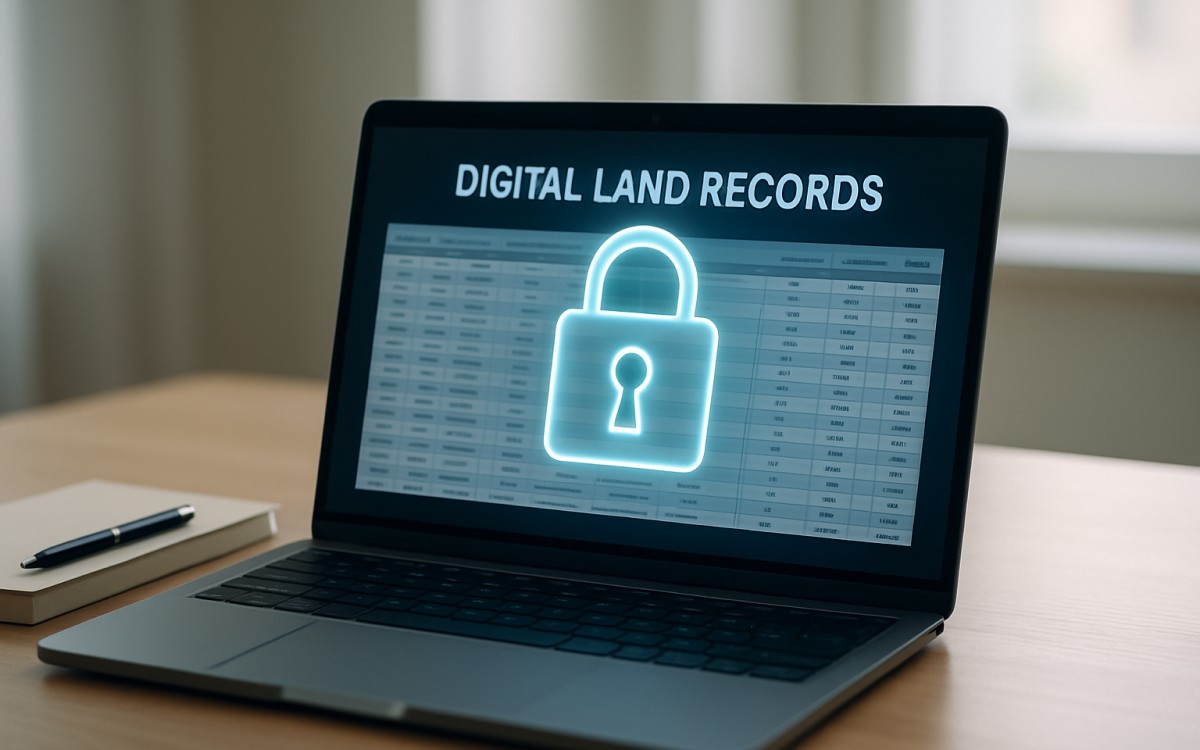
A home or a piece of land often represents a lifetime of dreams, effort, and savings. With the shift towards digital governance, land record management has entered a new era where property details are recorded, verified, and preserved electronically. This move towards secure digital storage is transforming how you safeguard ownership, resolve disputes, and access vital property information with greater confidence.
Why Digitising Land Records Matters
Traditional land documentation systems relied on paper files, handwritten registers, and multiple local offices that often worked independently. These records were prone to deterioration, loss, or tampering over time. Digitising them has introduced a layer of reliability that paper-based systems could never provide.
When your property details are in a trusted digital format, accuracy improves, verification becomes faster, and the risk of fraud drops significantly. For citizens, this translates into peace of mind—knowing that their title details are securely preserved and can be retrieved when needed.
Key outcomes of digitisation include:
- Faster retrieval of ownership and registration details
- Reduction in boundary-related and title disputes
- Easier access to maps and survey information
- Transparent record updates when land changes hands
By turning vast volumes of fragile paperwork into digital databases, the modern system protects both the data and the owner’s legal standing.
The Technology Behind Secure Storage
A core part of digital land record safety lies in where and how the data is stored. The entire framework operates through high‑performance data centers equipped to manage sensitive data around the clock. These facilities maintain multiple layers of defence, including encryption, restricted access, fire prevention, and uninterrupted power supply.
Encryption and Access Control
Every record stored online is encrypted, which means it is converted into a secure digital code that only authorised systems can decode. Access is granted only to verified officials and users, minimising the chances of unauthorised viewing or modification.
Two‑factor authentication, biometric verification, and unique transaction IDs add further layers of security. When you log in to check or download your property record, each step ensures that you are indeed the rightful person requesting that information.
Backups and Disaster Recovery
Reliable data centers follow stringent backup routines. At frequent intervals, identical copies of records are made and stored in separate locations—sometimes even in another region. If one server fails due to a technical glitch or a natural event, another server can instantly take over. You continue to enjoy seamless access without fear of data loss.
Blockchain Experiments
Some regions are testing blockchain-based land record systems. Blockchain systems store data across distributed ledgers that are nearly impossible to alter without leaving a trace. Each transaction—such as a sale or an inheritance—is recorded as a permanent digital block, adding an extra layer of protection against manipulation. While adoption is still limited, it signals the future direction of secure property management.
Ensuring Data Accuracy and Transparency
Security protects data from theft, but accuracy ensures it holds legal value. Digitisation projects include data verification as a major step. Survey maps are cross‑checked, ownership histories are validated, and corrections are recorded through official processes.
When you look up a digital record, you can often view the entire chain of ownership, tax details, and mutation status in one place. The system’s transparency not only helps you verify details but also discourages misuse or illegal transfers.
Moreover, application programming interfaces (APIs) now allow integration between land databases and other civic platforms. For example, when you apply for a construction permit, the digital system automatically fetches and validates your land details. This reduces bureaucratic loops and speeds up approvals.
Protecting Property Rights through Legal Recognition
Digital land records strengthen your legal rights by serving as recognised proof of ownership. Courts and revenue offices accept authenticated digital copies as valid evidence. This acceptance gives you confidence that your title cannot be easily questioned, misplaced, or forged.
The online availability of information also deters fraudulent transactions. Anyone intending to buy a property can check its authenticity within minutes before finalising a deal. Such open access empowers you to make informed decisions and reduces the scope for deceit.
Another advantage is that the registration and mutation process is gradually shifting to online platforms. Once submitted electronically, documents are verified by officials and stored in the central database immediately, reducing waiting time and face‑to‑face interactions.
Data Privacy Concerns and Safeguards
With personal data going digital, privacy naturally becomes a concern. Land records contain sensitive information such as addresses and ownership identifiers. To ensure these remain protected, governments and data controllers follow clear privacy policies that regulate who can access what.
Sensitive information is masked for public viewing, while detailed files remain visible only to authorised users. All activities on the system are logged, allowing you to trace any unusual access. Periodic audits by cybersecurity specialists guarantee that safety standards stay up to date with the latest threats.
You are also encouraged to practise safe usage habits, such as using official portals only, setting strong passwords, and avoiding cybercafés or public networks for login activities.
The Citizen’s Role in Maintaining Secure Records
Security is a two‑way responsibility. While data centers and government systems safeguard your records, your actions help maintain their integrity. You play a role by ensuring that your details are accurate, documents are regularly updated, and disputes are promptly resolved.
A few proactive steps you can take include:
- Checking your land records periodically through official portals
- Submitting change details, such as sale or inheritance, without delay
- Reporting any irregularity or unauthorised alteration noticed in your online file
- Retaining copies of digital receipts and transaction acknowledgements
When citizens actively participate, the system remains healthy, reliable, and resistant to misuse.
Benefits of Safe Digital Land Records
The shift to safe digital storage offers multiple benefits not only for individuals but also for the entire ecosystem of governance, finance, and real estate.
- Ease of access: You can obtain land details online without long visits to government offices.
- Fraud reduction: Tamper‑proof systems identify and prevent unauthorised changes.
- Economic growth: Transparent records attract more secure property investments.
- Administrative efficiency: Automated updates free officials to focus on field verification and dispute resolution.
- Disaster resistance: Fires, floods, or other events cannot destroy data that has been safely replicated across data centers.
By consolidating vast amounts of property information, digital systems ensure your rights remain protected regardless of time, distance, or physical hazards.
Moving Towards More Intelligent Systems
The next phase of digital land management focuses on intelligent tools and predictive analytics. Artificial intelligence systems can detect duplicate entries, identify overlapping boundaries, and trigger alerts for suspicious activity. Combined with geospatial mapping and satellite imagery, this will take accuracy to new levels.
Another parallel effort is enhancing the user experience. Simplified portals in regional languages, mobile apps for instant verification, and help desks for digital literacy support will make the system more inclusive. The idea is that no matter where you live, you should be able to prove and protect ownership without obstacles.
As data technologies mature, policies around interoperability and standardisation will bridge gaps between states and departments, creating a unified digital property ecosystem.
Safe digital storage of land records represents a foundational step towards secure property ownership. It reduces paperwork, enhances transparency, and ensures your rights are preserved regardless of physical or administrative changes. With dependable data centers, encryption, and citizen participation, the system is evolving into a trusted guardian of your property records.
By staying informed and engaged, you not only protect your current assets but also contribute to a future where owning land is simpler, safer, and entirely secure.