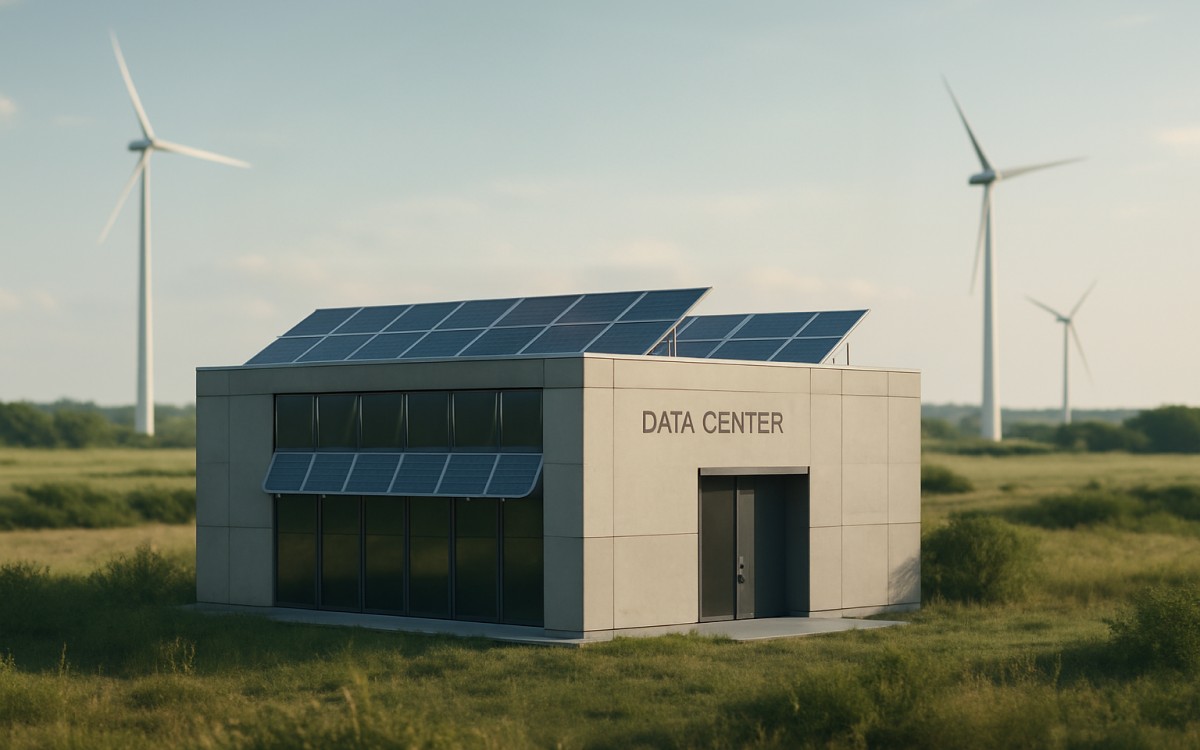
Building a data centre is one of the most resource-intensive undertakings in modern infrastructure. These facilities consume enormous amounts of energy, require significant water for cooling, and must operate continuously without interruption. As sustainability becomes a central priority for businesses and governments alike, the question of where a data centre is built has become just as important as how it is built. Location is not just a logistical decision. It is an environmental one.
Why Location Matters More Than Ever
The environmental impact of a data centre begins long before a single server is switched on. Site selection determines access to renewable energy sources, the availability of natural cooling options, the carbon intensity of the local power grid, and the ease with which sustainable building materials can be sourced and transported.
A data centre built in a location with abundant solar or wind energy has a fundamentally different environmental profile from one that relies on a coal-heavy grid. Similarly, a facility situated in a naturally cool climate requires significantly less mechanical cooling than one built in a hot and humid region. These location-based factors compound over the lifetime of a facility, which typically spans several decades, making the initial site selection decision one with lasting environmental consequences.
Access to Renewable Energy Sources
Renewable energy availability is among the most critical location factors for any operator looking to build an eco-friendly data centre. Facilities that can source their power directly from solar farms, wind installations, or hydroelectric plants significantly reduce their carbon footprint compared to those dependent on conventional grid electricity.
In India, the rapid expansion of solar energy infrastructure has created new opportunities for data centre operators to establish facilities in regions where clean energy is both abundant and cost-effective. Proximity to renewable energy generation reduces transmission losses and allows operators to enter into direct power purchase agreements with energy producers, giving them greater control over both their energy costs and their sustainability credentials.
For global technology companies evaluating data centre locations, the availability of credible renewable energy options is increasingly a non-negotiable requirement rather than a bonus consideration.
Natural Cooling Advantages
Cooling is one of the largest energy expenses in any data centre operation. Servers generate substantial heat during operation, and maintaining optimal operating temperatures requires continuous cooling infrastructure. In locations where the natural climate supports lower ambient temperatures for a significant portion of the year, the mechanical cooling load is reduced, leading to meaningful energy savings.
Coastal locations benefit from consistent sea breezes that can be incorporated into cooling system design. Higher altitude locations naturally offer cooler air that reduces the demand on mechanical systems. Even within India’s diverse geography, there are locations where natural conditions support more energy-efficient cooling approaches compared to the hottest urban centres.
Data centre operators who factor in natural cooling potential during site selection are able to design facilities with lower power usage effectiveness ratings, which is the industry standard measure of energy efficiency in data centre operations. A lower rating indicates a more efficient facility, and location plays a direct role in achieving it.
Water Availability and Conservation
Many traditional data centre cooling systems rely on significant volumes of water, making water availability an important location consideration. However, as water conservation becomes a global priority, the relationship between data centre operations and local water supply deserves close attention.
Eco-friendly data centre design increasingly incorporates water-efficient cooling technologies, including air-side economisation and closed-loop systems that minimise water consumption. Selecting locations where these technologies can be deployed effectively, and where the local water table is not placed under stress by industrial operations, is part of responsible site planning.
Some operators are also exploring locations near treated wastewater facilities, allowing them to use recycled water for cooling purposes rather than drawing from freshwater sources. This approach reduces the environmental impact of operations and demonstrates a commitment to responsible resource management.
Proximity to Renewable Energy Infrastructure Versus Urban Connectivity
One of the genuine tensions in eco-friendly data centre location planning is the trade-off between proximity to renewable energy sources and proximity to the urban centres that generate the most data traffic. Locating a data centre far from a city may offer excellent access to solar or wind energy, but it may also introduce latency issues for applications that require very fast response times.
Smart location planning addresses this by identifying sites that balance connectivity requirements with sustainability goals. In India, the development of high-speed fibre optic networks connecting cities and industrial corridors to major urban centres has expanded the range of viable locations for data centre development, making it increasingly possible to find sites that satisfy both criteria.
Hybrid approaches, where large-scale storage and processing workloads are handled at remote, renewable-energy-rich facilities while latency-sensitive applications are served from smaller urban edge locations, are also gaining traction as a practical solution to this challenge.
Land Use and Biodiversity Considerations
Responsible location planning for a data centre also takes into account the ecological character of the proposed site. Building on previously developed or industrial land is preferable to developing on green spaces, agricultural land, or areas of ecological significance.
Operators committed to genuine sustainability conduct thorough environmental impact assessments before finalising a site. These assessments evaluate the potential effects on local biodiversity, soil quality, and natural drainage patterns, and they inform design decisions that minimise the facility’s footprint on the surrounding environment.
Conclusion
Location is the foundation upon which every other sustainability decision in data centre development is built. Access to renewable energy, natural cooling potential, responsible water use, connectivity, and thoughtful land selection all flow from where a facility is sited. As India’s data centre industry continues to grow, the operators and developers who approach location selection with environmental rigour will be the ones best positioned to build infrastructure that is not only efficient and reliable but genuinely sustainable for the long term.