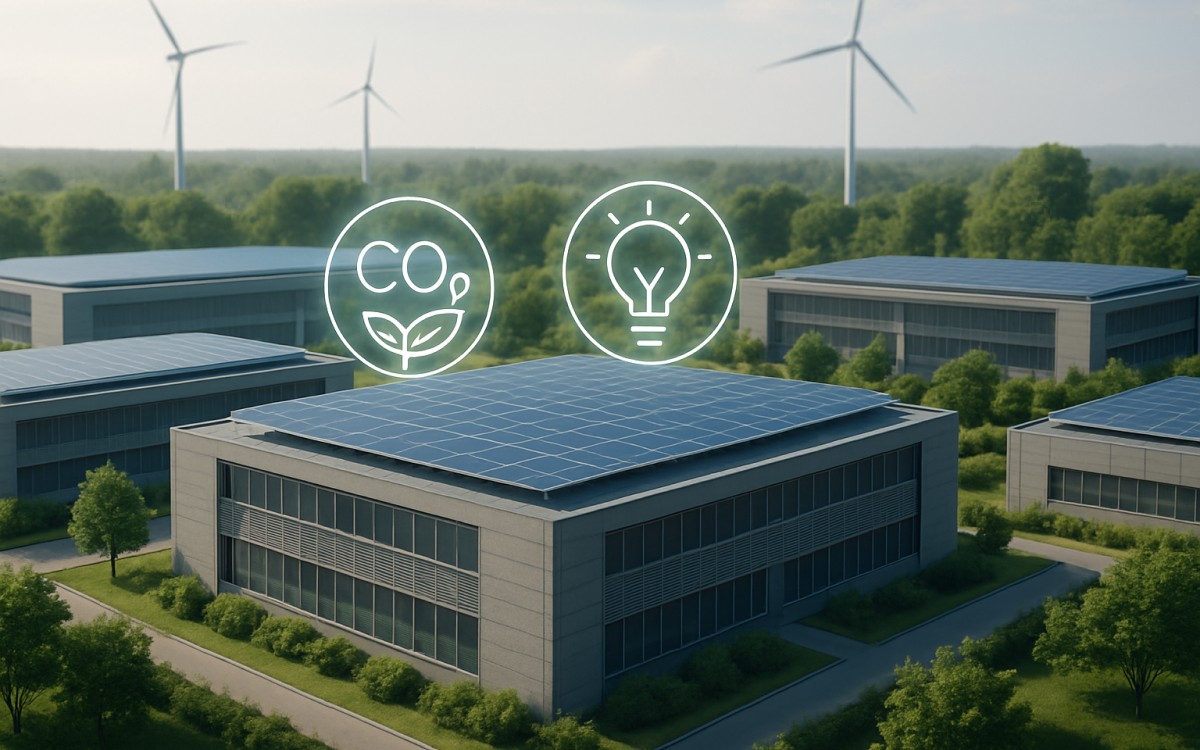
Running a data centre requires an immense amount of energy. To balance technological progress with environmental care, the country’s largest data centre parks are now committed to ambitious carbon neutral goals. By shifting to renewable energy and adopting innovative cooling technologies, these massive hubs are transforming into sustainable ecosystems. This journey is not just about reducing emissions; it is about building a responsible foundation for our future.
Why Carbon Neutrality Matters
The scale of data consumption today is unprecedented. From streaming and fintech to the massive compute requirements of Artificial Intelligence, every byte processed requires energy. Consequently, the power demand from these facilities is projected to continue to rise. Without a shift toward carbon neutrality, this growth could significantly increase the national carbon footprint.
Carbon neutral goals are designed to offset or eliminate the greenhouse gas emissions produced by these facilities. For the operators of massive data parks in hubs like Mumbai, Chennai, and Noida, achieving these targets involves a holistic approach. It is no longer enough to simply plant trees; the focus has shifted to fundamental changes in how energy is sourced, how equipment is cooled, and how waste is managed.
Using Renewables for Sourcing Power
The most significant hurdle on the path to carbon neutrality is electricity. Data centres are ‘always-on’ industries, requiring a constant, unwavering flow of power. Traditionally, this has meant relying on the national grid, which still draws heavily from coal. To break this cycle, large-scale operators are becoming some of the biggest consumers of renewable energy.
Power Purchase Agreements (PPAs)
Many developers are entering into long-term Power Purchase Agreements with solar and wind farm operators. By contracting power directly from renewable sources, data parks can ensure that a significant percentage of their fuel is clean.
Round-the-Clock (RTC) Green Power
One of the biggest challenges with solar and wind is intermittency—the sun doesn’t shine at night, and the wind doesn’t always blow. To solve this, the industry is moving toward round-the-clock renewable models. These combine multiple green sources with Battery Energy Storage Systems (BESS) to provide a steady stream of clean power even when the primary source is offline.
Moving Beyond Water for Cooling
Cooling is the second-largest consumer of energy in a data hub. As chips become more powerful, especially with the rise of AI-ready GPUs, they generate immense heat. Traditional air-conditioning is often insufficient and incredibly energy-intensive.
To meet carbon neutral goals, operators are adopting advanced cooling technologies:
- Liquid Cooling: Technologies like direct-to-chip or immersion cooling submerge components in non-conductive fluids. This is far more efficient at removing heat than air, drastically reducing the power needed for fans and chillers.
- Adiabatic Cooling: This uses the evaporation of water to cool the air, but in a highly controlled way that uses significantly less water than older cooling towers.
- Waste Heat Recovery: Some forward-thinking parks are exploring ways to capture the heat generated by servers and repurpose it, such as for industrial processes or heating nearby commercial spaces, though this is still in the early adoption phase locally.
Lowering the PUE
In the world of data centres, the gold standard for efficiency is Power Usage Effectiveness (PUE). This is a ratio of the total energy used by the facility compared to the energy delivered to the IT equipment. A PUE of 1.0 would be perfect, meaning every watt goes toward computing.
Historically, older facilities had PUEs of 2.0 or higher. Modern green data parks are aiming for much lower benchmarks, often targeting 1.25 or less. Achieving this requires a combination of intelligent building design, high-efficiency UPS (Uninterruptible Power Supply) systems, and AI-driven management software that can automatically adjust cooling and power based on real-time demand.
Role of Policy and the SHANTI Act
The drive toward sustainability is being bolstered by a supportive regulatory environment. The recent introduction of the Sustainable Harnessing and Advancement of Nuclear Energy for Transforming India (SHANTI) Act is a prime example. This legislation paves the way for the deployment of Small Modular Reactors (SMRs).
SMRs offer a promising solution for data centres because they provide high-density, carbon-free baseload power. Unlike solar or wind, nuclear power is constant, making it an ideal partner for the 24/7 requirements of a hyperscale data park. This policy alignment ensures that as the industry grows, it has the legal and infrastructural support to choose green alternatives over traditional fossil fuels.
Reusing and Recycling
Carbon neutrality also extends to the lifecycle of the hardware. The e-waste generated by thousands of servers being upgraded every few years is a significant environmental concern. Leading data parks are adopting circular economy principles to mitigate this:
- Sustainable Procurement: Choosing hardware from manufacturers who use recycled materials and offer take-back programmes.
- Modular Construction: Building facilities using prefabricated modules. This reduces construction waste and allows for more efficient, targeted cooling as the park expands.
- Battery Management: As facilities move toward large-scale battery storage, managing the lifecycle of lithium-ion or nickel-zinc batteries becomes crucial. Operators are partnering with recycling firms to ensure these materials do not end up in landfills.
Striving for Better WUE
While carbon is the primary focus, water usage is an inseparable part of the sustainability conversation. In water-stressed urban hubs, Water Usage Effectiveness (WUE) is a vital metric. To achieve their goals, many parks are now mandating the use of treated wastewater for cooling instead of fresh groundwater. By recycling water within a closed-loop system, these facilities can operate with a minimal impact on local municipal water supplies.
The AI Dilemma and Opportunity
There is a fascinating tension between the rise of AI and carbon goals. AI requires significantly more power than traditional cloud computing. However, AI is also the tool being used to solve the problem. Intelligent energy management systems can predict when a grid will be stressed and shift non-critical workloads to times when renewable energy is most abundant. This ‘demand-side flexibility’ allows data parks to act as stabilisers for the national power grid rather than just consumers.
A Future Powered by Responsibility
The transition to carbon neutral data centre parks is a complex journey, but the momentum is undeniable. By integrating renewable energy, pioneering new cooling methods, and adhering to strict efficiency standards, the industry is proving that digital ambition does not have to come at the cost of the planet. These facilities are no longer just the heart of the digital economy; they are becoming the leaders of the green transition.
As more businesses move their operations to the cloud, the sustainability credentials of their data centre partners will become a key differentiator. The ‘green’ data park is not just a trend; it is the new standard for a resilient and responsible future.