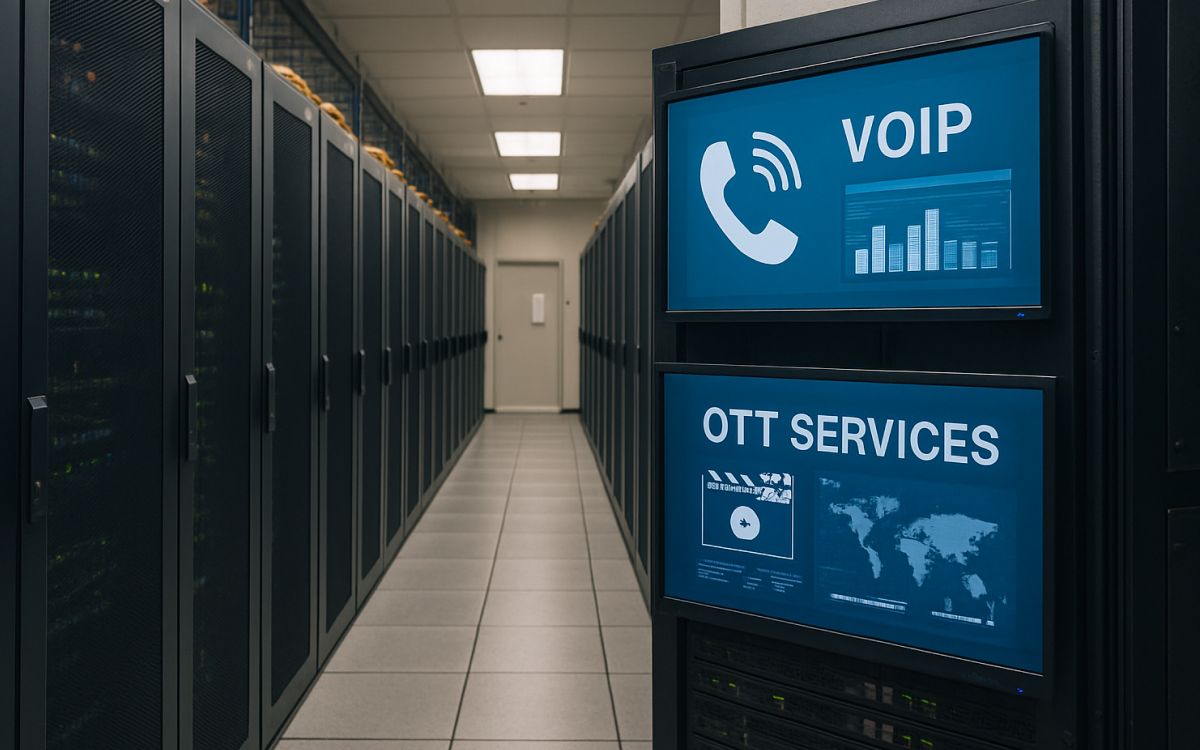
In today’s interconnected world, digital communication has become more advanced and efficient, with services like Voice over IP (VoIP) and Over-The-Top (OTT) applications transforming the way people communicate. These services rely heavily on data centers to function smoothly. Data centers play a pivotal role in ensuring the scalability, reliability, and performance of these services. This article explores how data centers enable VoIP and OTT services, their significance, and the future of these technologies.
What Are VoIP and OTT Services?
Before diving into the role of data centers, it’s essential to understand what VoIP and OTT services are.
VoIP allows users to make voice calls over the internet instead of traditional telephone networks. Services like Skype, WhatsApp, and Zoom are popular examples of VoIP platforms, enabling users to communicate globally at reduced costs.
On the other hand, OTT services refer to media content delivered over the internet without the involvement of traditional distribution channels like cable or satellite. Platforms like Netflix, YouTube, and Spotify fall under the OTT category, providing streaming services directly to users via the internet.
Both of these services rely on high-speed data transmission and large-scale infrastructure, which is where data centers come in.
Data Centers: The Backbone of Communication and Entertainment
A data center is a facility used to house computer systems and associated components, such as telecommunications and storage systems. Data centers store, manage, and distribute the data that powers many internet-based services. For VoIP and OTT services, they ensure that data is processed, stored, and delivered efficiently, making them critical to these technologies’ success.
These centers provide the necessary infrastructure to handle large volumes of data that are generated during voice calls or streaming sessions. With millions of users accessing these services daily, data centers offer the required reliability, redundancy, and speed needed to ensure uninterrupted communication and smooth media consumption.
Scalability and Reliability: Key Benefits of Data Centers
As the demand for VoIP and OTT services increases, scalability becomes crucial. Data centers provide the scalability required to accommodate growing user numbers, enhanced traffic, and expanding service offerings. With VoIP calls and media streaming services becoming more sophisticated, data centers can adjust their resources dynamically. They can allocate additional bandwidth, storage, or processing power as needed, ensuring that service quality is maintained even during peak usage periods.
Reliability is another benefit that data centers bring to VoIP and OTT services. These services need to be available 24/7, without any disruptions. Data centers achieve this by implementing advanced systems like backup power supplies, redundant hardware, and disaster recovery protocols. This means that even if one part of the infrastructure experiences failure, another will take over, ensuring that users continue to enjoy seamless communication and entertainment.
Optimizing Performance with Low Latency
Latency, or the time delay between sending and receiving data, is a critical factor in both VoIP and OTT services. For VoIP, high latency can lead to poor call quality, echo, or dropped connections, while in OTT services, it can cause buffering, low-resolution video, or audio lag.
Data centers are strategically located across the globe, which helps reduce latency. By positioning servers close to end-users, data centers can minimize the time it takes for data to travel between the source and the user. This geographical distribution of data centers ensures that VoIP calls are clearer, and OTT content is streamed smoothly, regardless of the user’s location.
Furthermore, modern data centers are equipped with Content Delivery Networks (CDNs) that store copies of data closer to end-users. This is especially important for OTT platforms, as CDNs ensure faster video streaming by caching content and delivering it from a nearby server, thus reducing buffering times.
Security and Data Protection in VoIP and OTT Services
Security is a major concern for users and service providers alike when it comes to VoIP and OTT services. Both types of services handle a large amount of sensitive data, including personal conversations and payment information for OTT subscriptions. Data centers play an integral role in securing this data.
These centers are equipped with robust cybersecurity measures such as firewalls, encryption, and intrusion detection systems. They follow stringent protocols to prevent data breaches, ensuring that user data is protected at all times. Moreover, with the rise of cyber threats, data centers are constantly evolving their security infrastructure to stay ahead of potential risks, giving users peace of mind while using these services.
The Future of VoIP and OTT Services
As both VoIP and OTT services continue to grow, the role of data centers is expected to evolve. The demand for high-quality video conferencing, 4K streaming, and advanced VoIP features will drive the need for even more powerful data centers with enhanced capabilities.
One key trend that will shape the future is the increasing adoption of edge computing. Edge computing involves processing data closer to where it is generated, rather than relying solely on centralized data centers. This shift will reduce latency further and improve the user experience for both VoIP and OTT services, especially in remote or underserved regions.
In addition, advancements in Artificial Intelligence (AI) and Machine Learning (ML) will allow data centers to optimize resource usage and predict service demand more accurately, leading to better service quality, energy efficiency, and cost-effectiveness.
Data centers are the unsung heroes behind the seamless experience users have with VoIP and OTT services. Their ability to ensure scalability, reliability, low latency, and security makes them indispensable to the growth of these technologies. As digital communication and entertainment continue to expand, data centers will only become more advanced, playing an even more pivotal role in shaping the future of VoIP and OTT services. Their ability to adapt to new demands and innovations ensures that users will continue to enjoy uninterrupted and high-quality services for years to come.